No products
Product successfully added to your shopping cart
There are 0 items in your cart. There is 1 item in your cart.
Our webstore uses cookies to offer a better user experience and we consider that you are accepting their use if you keep browsing the website.

Exhibition catalogue
- New Art Books
- Exhibition catalogue
- Highlights
- Art Book Sale
- Museum's Shop & Gifts
- Bilingual art books and foreign editions
- Children's Books
- Art History
- Painting
- Architecture
- Sculpture
- Drawing & Engraving
- Photography
- Contemporary art
- Decorative Arts & Design
- Art Techniques
- Critics
- Entertainment art books
- Civilisations
- Partners Reviews
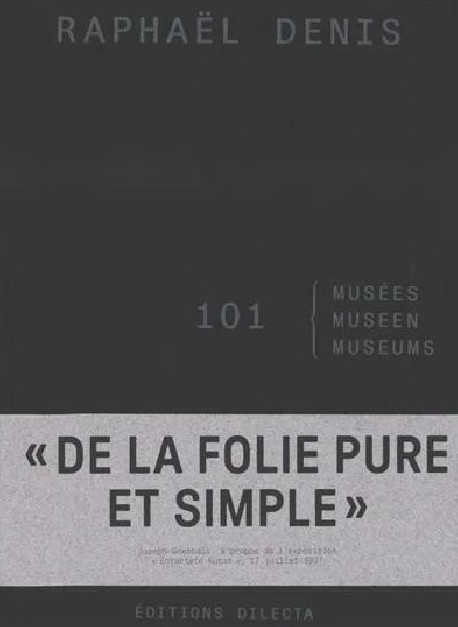
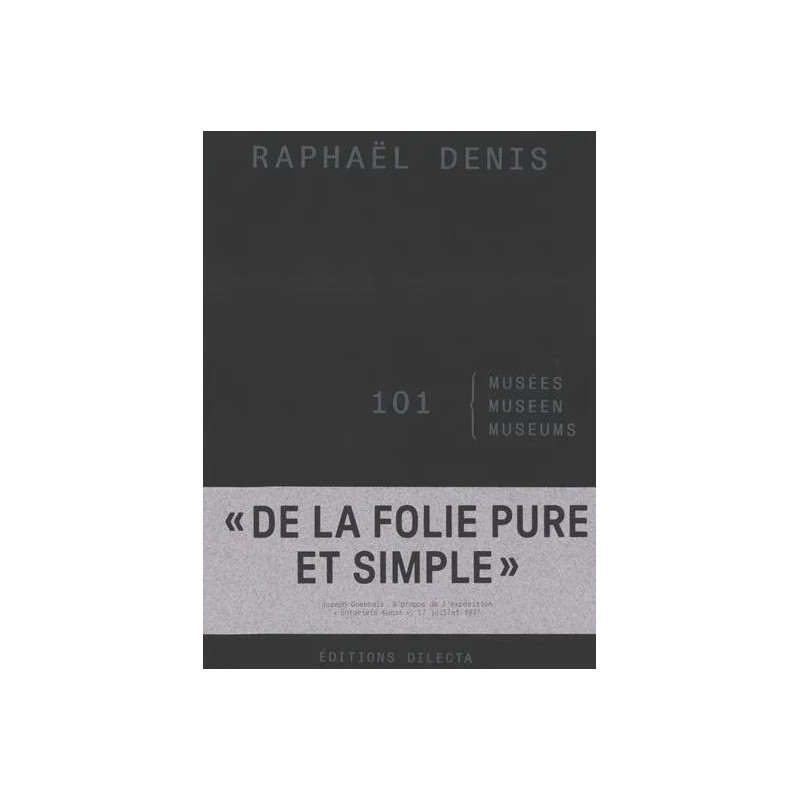
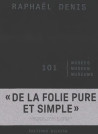
Raphaël Denis - 101 musées. De la folie pure et simple
For over ten years, Raphaël Denis has been developing an artistic practice centred on the fate of cultural artefacts in the face of the violence of history. Through installations and documentary research, he explores the mechanisms of destruction, erasure and disappearance that affect works of art and collections, placing memory at the heart of his work.
Shipped within 4 to 8 days
| Model | 9782373722413 |
| Artist | Raphaël Denis |
| Author | Raphaël Denis, Victor Claass |
| Publisher | Dilecta |
| Format | Ouvrage broché |
| Number of pages | 488 |
| Language | Bilingue Français / English |
| Dimensions | 230 x 170 |
| Published | 2026 |
| Museum | Museum Folkwang, Essen |
For over ten years, Raphaël Denis has been developing an artistic practice centred on the fate of cultural artefacts in the face of the violence of history. Through installations and documentary research, he explores the mechanisms of destruction, erasure and disappearance that affect works of art and collections, placing memory at the heart of his work.
This artist’s book draws its inspiration from the series ‘La Loi normale des erreurs’, begun in 2014. It originated from an exceptional document held at the Victoria & Albert Museum in London: a list methodically cataloguing works deemed ‘degenerate’, which were confiscated by the Nazis from 1937 onwards. Even before the outbreak of the Second World War, more than 20,000 works of art were seized from 101 German museums; most of them were sold off at rock-bottom prices, either privately or at auction, to finance the Nazi regime. Hundreds of them featured in travelling exhibitions of ‘degenerate art’ designed as acts of humiliation. As for the thousands of works deemed unusable, they were reduced to ashes and are marked in the list with a simple ‘X’.
Reproduced here in full, this grim archive forms the heart of the book. Organised museum by museum, it lists each work, specifying its artist, technique and fate – we learn, for example, that 1,273 works were purged from the collections of the Folkwang Museum in Essen, 414 of which were destroyed. It thus reveals the scale of a campaign of cultural purging and remains, for the works that have disappeared, the last trace of their existence.
Delving into this staggering list, which spans 482 pages, is a unique historical experience, blending documentary detachment with the human, aesthetic and material destinies reflected behind this amassed data. (excerpt from Victor Claass’s text, in the introduction to the book).
Recently viewed items