Aucun produit
Produit ajouté au panier avec succès
Il y a 0 produits dans votre panier. Il y a 1 produit dans votre panier.
Afin d'optimiser votre expérience de navigation, ce site utilise des cookies. En navigant sur ce site, vous en acceptez l'usage.

Editions Bilingues & inter.
- Nouveautés
- Catalogue d'exposition
- Sélection Fêtes
- Prix réduits
- Idées Cadeaux
- Editions Bilingues & inter.
- Livres d'art enfance et jeunesse
- Histoire de l'Art
- Peinture
- Architecture
- Sculpture
- Dessin Gravure
- Photographie
- Art contemporain
- Arts Décoratifs Design
- Techniques des Arts
- Critique
- Beaux livres
- Civilisations
- Revues partenaires

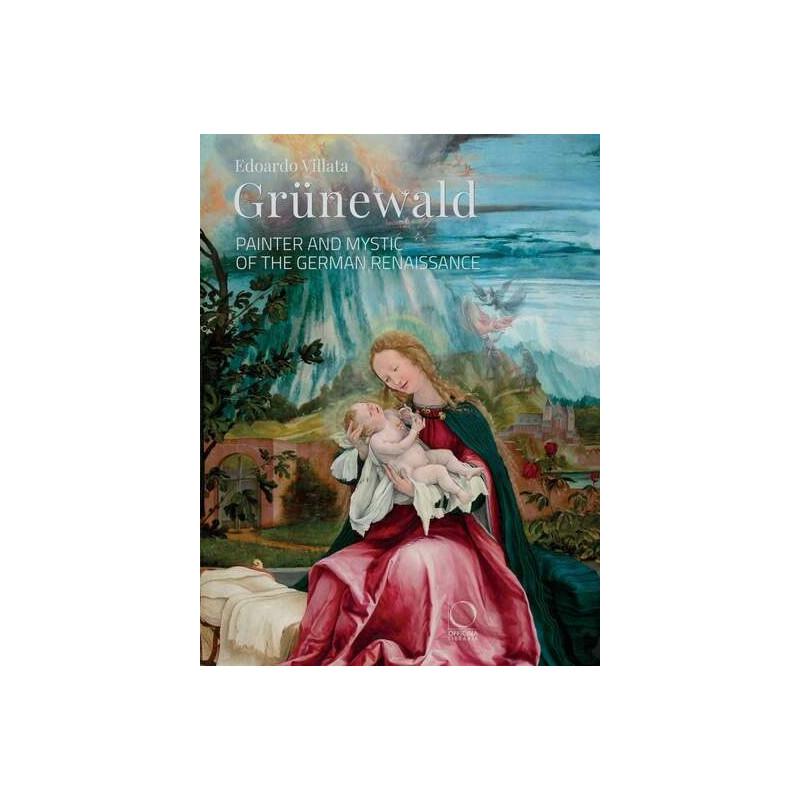
Grünewald - Painter and Mystic of the German Renaissance
The German painter Matthias Grünewald (c. 1480–1528) remains one of the most enigmatic figures of the Renaissance, his artistic identity defined by stylistic complexity and historical obscurity. In this study, Edoardo Villata re-examines Grünewald's work through a critical re-evaluation of sources, stylistic developments, and the broader network of artistic influences.
1 article en stock : expédié le jour-même (commande avant 14h00)
| Référence | 9788833673349 |
| Artiste-Genre | Mathias Grünewald |
| Auteur(s) | Edoardo Villata |
| Editeur(s) | Officina Libraria |
| Format | Softcover |
| Nb. de pages | 304 |
| Langue | English |
| Dimensions | 270 x 200 |
| Date parution | 2025 |
The German painter Matthias Grünewald (c. 1480–1528) remains one of the most enigmatic figures of the Renaissance, his artistic identity defined by stylistic complexity and historical obscurity. In this study, Edoardo Villata re-examines Grünewald's work through a critical re-evaluation of sources, stylistic developments, and the broader network of artistic influences.
Going beyond established interpretations, Villata explores the relationship between documentary research and comparative analysis, situating Grünewald within the artistic and intellectual landscape of his time. By integrating stylistic analysis, documentary research and a broader perspective that extends beyond painting to sculpture and religious thought (two of the most relevant findings are the discovery of the role of sculptor Tilman Riemenschneider in his training and of Johann von Staupitz, Luther's mentor, in the iconography of the Isenheim Altarpiece), Villata re-evaluates Grünewald's possible links with contemporary artistic centres, offering a new reading of his work and its historical significance.
Much more than a monograph, this study challenges prevailing narratives and emphasises the need for methodological rigour in art history research. This study is essential reading for researchers and specialists alike and is an indispensable contribution to Grünewald studies and Renaissance historiography.
Produits déjà vus