No products
Product successfully added to your shopping cart
There are 0 items in your cart. There is 1 item in your cart.
Our webstore uses cookies to offer a better user experience and we consider that you are accepting their use if you keep browsing the website.

Exhibition catalogue
- New Art Books
- Exhibition catalogue
- Highlights
- Art Book Sale
- Museum's Shop & Gifts
- Bilingual art books and foreign editions
- Children's Books
- Art History
- Painting
- Architecture
- Sculpture
- Drawing & Engraving
- Photography
- Contemporary art
- Decorative Arts & Design
- Art Techniques
- Critics
- Entertainment art books
- Civilisations
- Partners Reviews
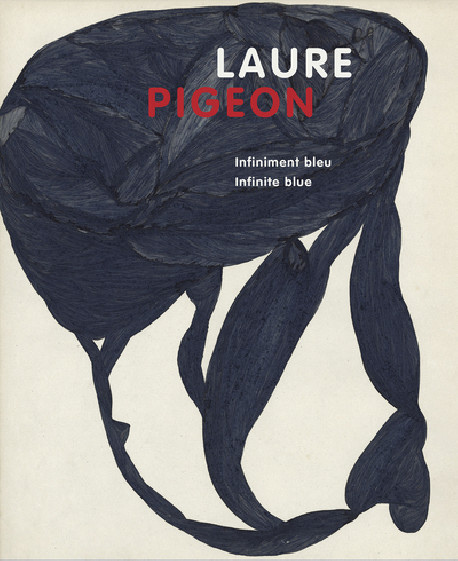
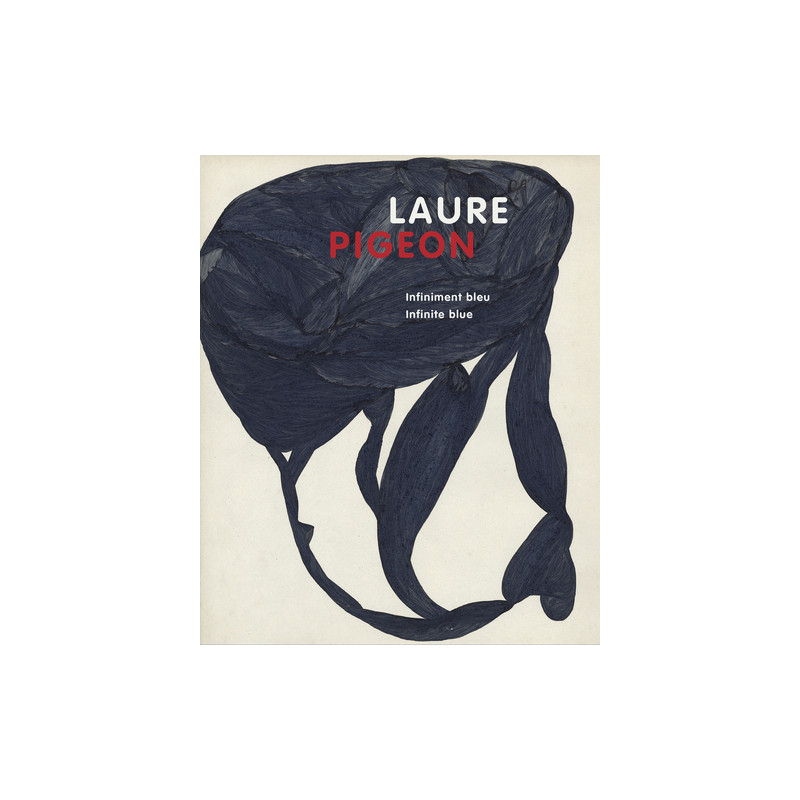
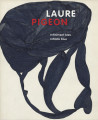
Laure Pigeon - Infinite blue
Laure Pigeon (1882–1965) is one of the major figures of Art Brut, alongside Aloïse Corbaz and Adolf Wölfli. Her graphic work is dense and spiritual, combining messages from the beyond with unique creations.
1 item in stock
| Model | 9788874394128 |
| Artist | Laure Pigeon |
| Author | Anic Zanzi, Flavie Beuvin et Vânia Vaz De Freitas |
| Publisher | Collection de l’Art Brut / 5 Continents |
| Format | Ouvrage broché |
| Number of pages | 192 |
| Language | Bilingue Français / English |
| Dimensions | 280 x 230 |
| Published | 2025 |
| Museum | Collection de l’Art Brut, Lausanne, Suisse |
Catalogue of the Laure Pigeon exhibition, presented at the Collection de l’Art Brut, Lausanne, Switzerland (10 October 2025 - 1 February 2026).
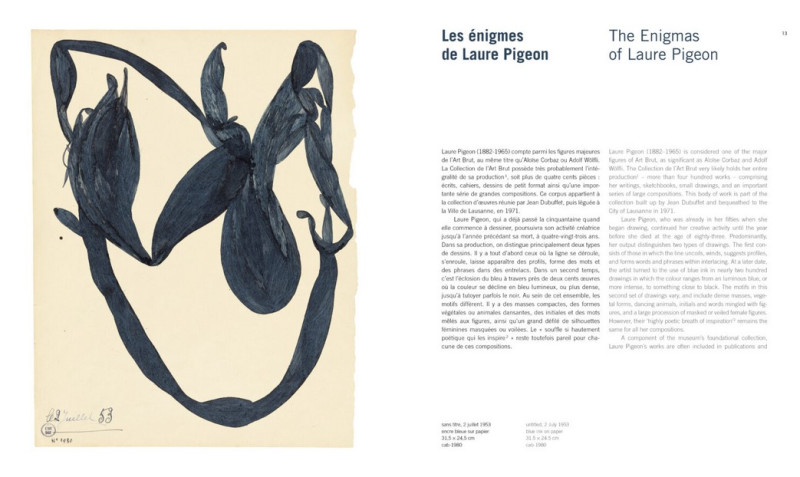
The Collection de l'Art Brut probably owns the entire body of work by Laure Pigeon (1882–1965), comprising more than 400 pieces, including writings, notebooks, small-format drawings and a large series of large-scale compositions in blue ink. This body of work is part of the collection acquired by Jean Dubuffet, the historical collection that formed the basis of the museum.
Laure Pigeon (1882–1965) started drawing at the age of 53, and her body of work was only discovered after her death. Her creations, saved from destruction, were subsequently acquired by Jean Dubuffet. The Collection de l’Art Brut likely holds the entirety of her output: a little over 400 drawings, many contained in notebooks, and produced over the course of 30 years.
Like fellow spiritualist artists Madge Gill, Jeanne Tripier, Augustin Lesage and Raphaël Lonné, Pigeon believed that she had been “chosen” to convey messages from the beyond and claimed that her hands were guided by an outside entity. As a starting point for each piece, she would use a Ouija board to spell out the missive from the spirits letter by letter, relinquishing all control over what she was writing. Next, she would set the board aside and let her hand wander across the page of its own accord, producing a composition of interwoven texts and drawings. Through this process, Pigeon tapped into her unconscious, resurfacing memories that merged with products of her imagination.
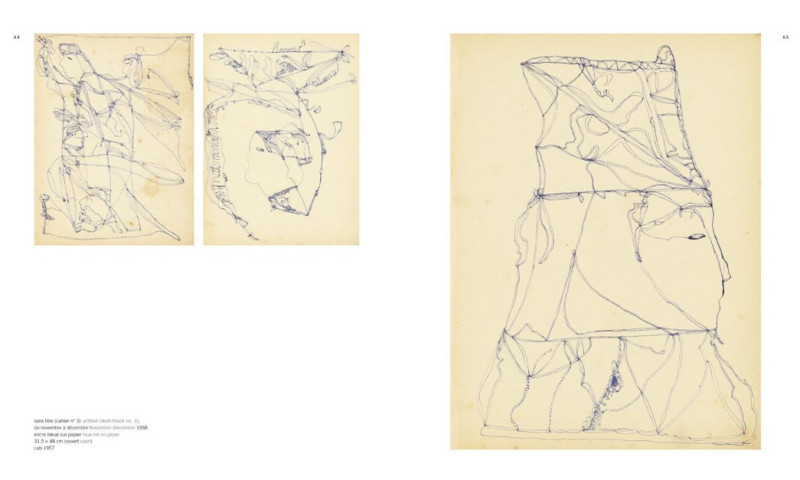
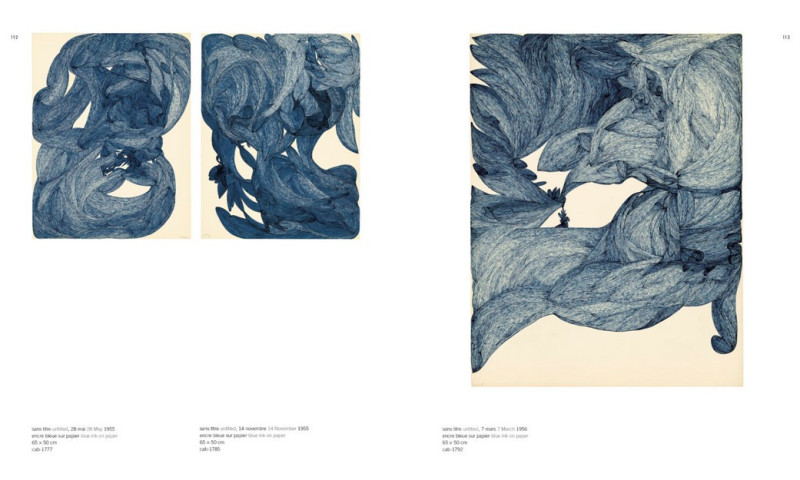
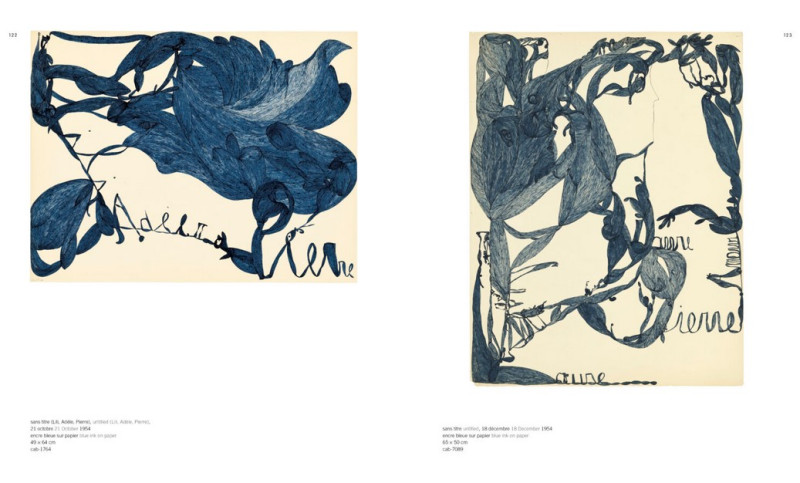
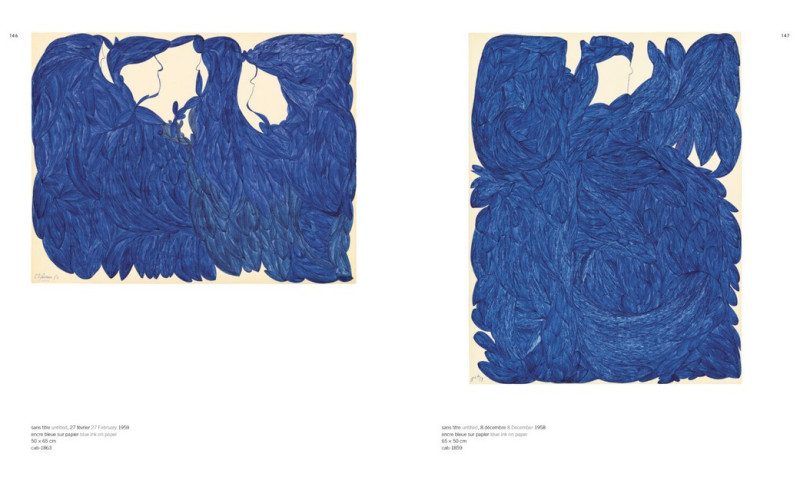
Pigeon’s oeuvre can broadly be divided into two periods. Her early works feature interlacing lines that stretch and wind across the page like woven threads, tracing shapes and the outlines of letters. The drawings she produced from 1953 onwards, meanwhile, are dominated by the colour blue in all its shades: from the lightest tones to darker hues sometimes verging on black. These later pieces include various motifs – such as compact masses, dancing plants and animals, initials and names – mixed in with the figures and a long line of masked or veiled female silhouettes. Despite their variety, Dubuffet saw the same “inherently poetic inspiration” behind all of Pigeon’s works.
Recently viewed items