No products
Product successfully added to your shopping cart
There are 0 items in your cart. There is 1 item in your cart.
Our webstore uses cookies to offer a better user experience and we consider that you are accepting their use if you keep browsing the website.

Art History
- New Art Books
- Exhibition catalogue
- Highlights
- Art Book Sale
- Museum's Shop & Gifts
- Bilingual art books and foreign editions
- Children's Books
- Art History
- Painting
- Architecture
- Sculpture
- Drawing & Engraving
- Photography
- Contemporary art
- Decorative Arts & Design
- Art Techniques
- Critics
- Entertainment art books
- Civilisations
- Partners Reviews
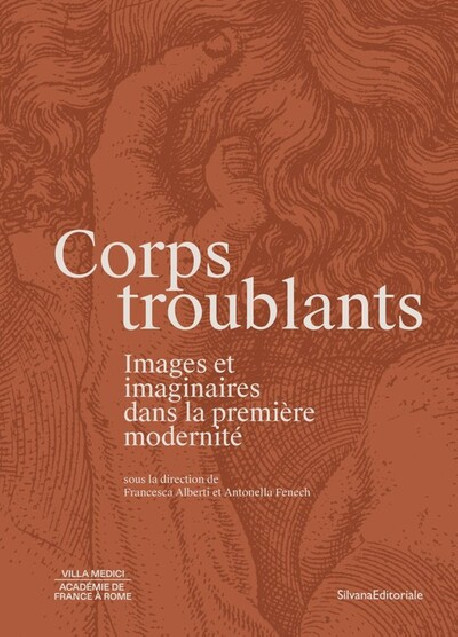
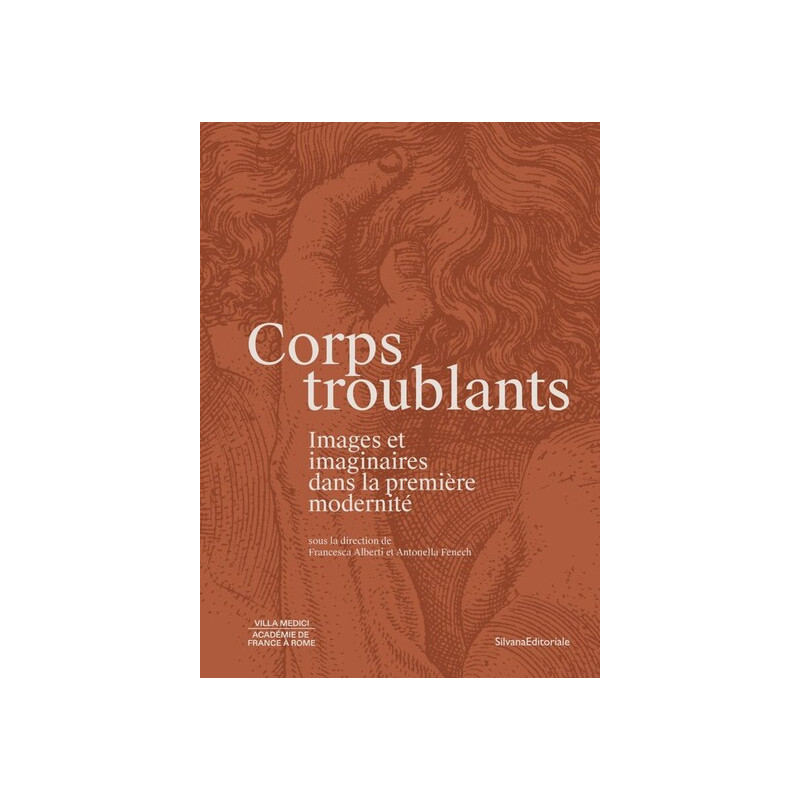
Disturbing Bodies – Images and Imaginaries in Early Modernity
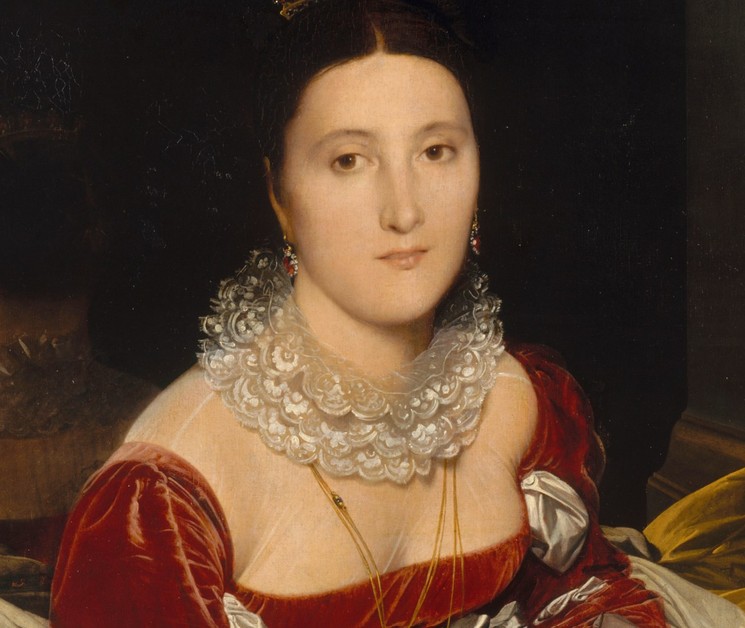
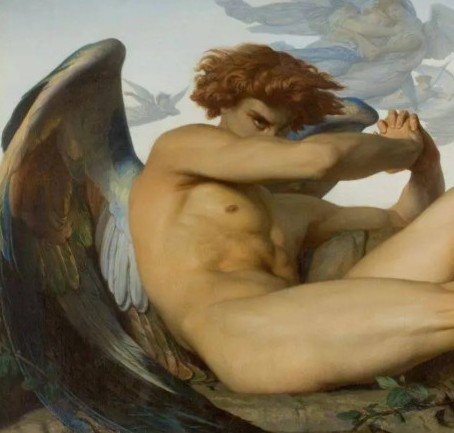
Upside-down bodies, contorted limbs, grimacing faces, exposed organs and orifices: these are all images which, between the late Middle Ages and the early modern period, were capable of – and still are capable of – unsettling viewers and provoking unease.
Shipped within 5 to 10 days
| Model | 9788836660469 |
| Artist | Histoire de l'art |
| Author | Sous la direction de Francesca Alberti, Antonella Fenech |
| Publisher | Villa Medici / Académie de France à Rome / Silvana |
| Format | Broché avec rabats |
| Number of pages | 512 |
| Language | Français, anglais, italien |
| Dimensions | 240 x 170 |
| Technique(s) | 200 illustrations |
| Published | 2026 |
Upside-down bodies, contorted limbs, grimacing faces, exposed organs and orifices: these are all images which, between the late Middle Ages and the early modern period, were capable of – and still are capable of – unsettling viewers and provoking unease.
Transcending the frameworks that determine the possibility of a serene gaze upon the body, these expressions unsettle through their contrast with the cultural construct of the ‘idealised’ body. Representations of fragmented, dislocated or porous bodies thus confuse the gaze and provoke, in turn, aversion, anxiety, agitation or desire.
This unease arises from the incongruity of the postures and movements depicted, but also from the framing, the choice of colours, or the shifts in scale. The image then becomes untenable, perceived in turn as indecent, excessive, senseless or unnatural.
To consider these representations as potential agents of a perception of the body that alters the reception of the image leads us to historically examine the points of articulation between complex notions: the body and the image, the body within the image. Ultimately, it is a matter of considering this disturbance as a shifting and indeterminate affect, which unsettles the mind, body and senses of those who find themselves facing the image.
Corpi capovolti, arti contorti, volti smorfiosi, organi e orifizi esposti: tutte immagini che, tra la fine del Medioevo e la prima modernità, hanno potuto – e possono ancora – turbare e suscitare disagio.
Superando gli schemi che condizionano la possibilità di uno sguardo sereno sul corpo, queste espressioni turbano per effetto di contrasto con la costruzione culturale del corpo «idealizzato». Le rappresentazioni di corpi frammentati, disarticolati o porosi disorientano così lo sguardo e provocano a turno avversione, angoscia, turbamento o desiderio.
Questo turbamento nasce dall’incongruenza delle posture e dei movimenti rappresentati, ma anche dalle inquadrature, dalle scelte cromatiche o ancora dalle rotture di scala. L’immagine diventa allora insostenibile, percepita a turno come indecente, eccessiva, insensata o innaturale.
Pensare a queste rappresentazioni come a tanti potenziali agenti di una percezione del corpo che altera la ricezione dell’immagine porta a interrogarsi storicamente sui punti di articolazione tra nozioni complesse: il corpo e l’immagine, il corpo nell’immagine. Si tratta infine di considerare il turbamento come un affetto mutevole e indeterminato, che sconvolge la mente, il corpo e i sensi di chi si trova di fronte all’immagine.
Content
Avant-propos
Alessandro Gallicchio et Sam Stourdzé
De l'opacité du corps et du trouble
Antonella Fenech et Francesca Alberti
Troubling in (and about) History
Alessandro Arcangeli
I_ IMBRICATIONS, HYBRIDATIONS
Monstres obscènes: une éthique du dévoilement au XIIIe siècle
Pierre-Olivier Dittmar et Maud Pérez-Simon
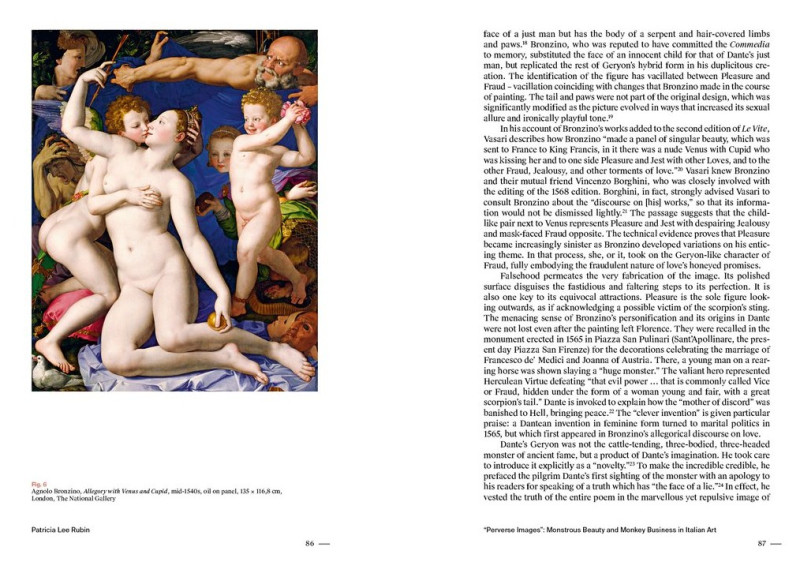
«Perverse Images»: Monstrous Beauty and Monkey Business in Italian Art from Botticelli to Bronzino
Patricia Lee Rubin
A Troubling Beast: The Hybrid Body of Alciato's Sphinx
Sara F. Matthews-Grieco
Détourner, contrefaire, hybrider: le corps monstrueux des gravures polémiques
Martial Guédron
II_ TORSIONS, DISLOCATIONS
Figura serpentinata et figura sforzata?: affects et mouvements contradictoires dans la théorie et l'art de Léonard à Michel-Ange, de Ficin à Bruno
Baptiste Tochon-Danguy
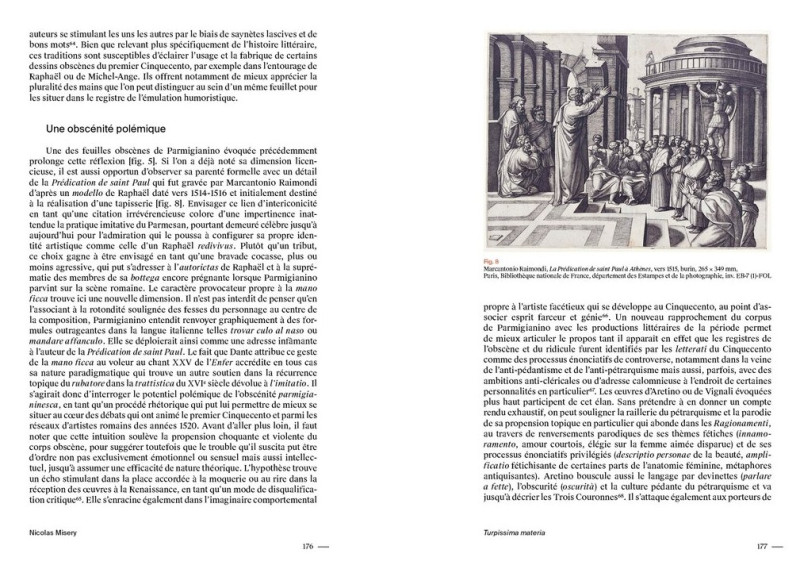
Turpissima materia. Fabrique, efficacité et transversalité du corps obscène dans l'art de Parmigianino
Nicolas Misery
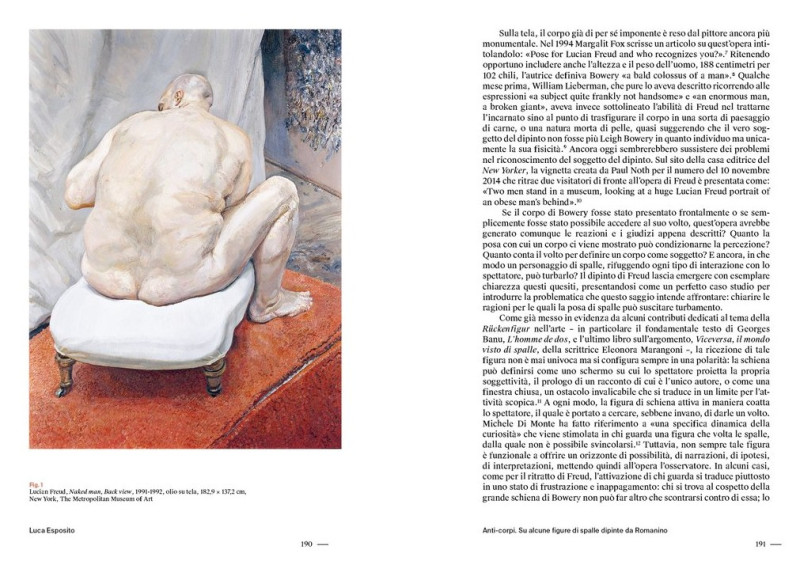
Anti-corpi. Su alcune figure di spalle dipinte da Romanino
Luca Esposito
Les nus sconcertatissimi d'Andrea Commodi
Angèle Tence
Disfigured Mobiles: Titian and Tityus in Exile
Todd Olson
III_ OUVERTURES, DÉ-FIGURATIONS
Partage des viscères. Animalité de l'homme dans La Grande Boucherie d'Annibal Carrache
Giovanni Careri
Deformitas te format.
Le corps troublant de saint Érasme d'après Poussin
Ralph Dekoninck
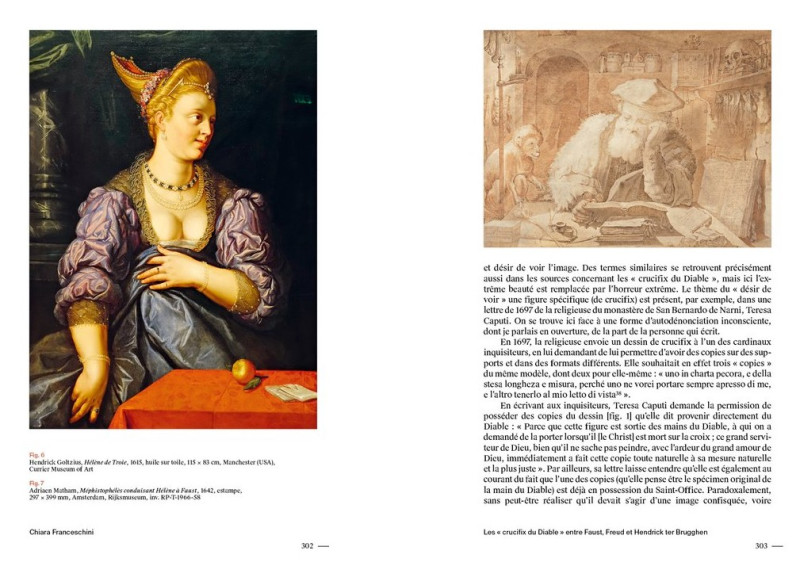
Les «?crucifix du Diable?» entre Faust, Freud et Hendrick ter Brugghen
Chiara Franceschini
Precarious Body: De/Formations in the «Crooked Carpenter» of Innsbruck
Sara Lent Frier
Lining Trouble: Jacques Callot's Les Gueux
Marika Takanishi Knowles
IV_ REGARD TROUBLÉ, REGARD TROUBLE
Inutilis clitoridis excrescentia, à savoir comment retrancher l'inutile excroissance du clitoris au début de l'époque moderne
Concetta Pennuto
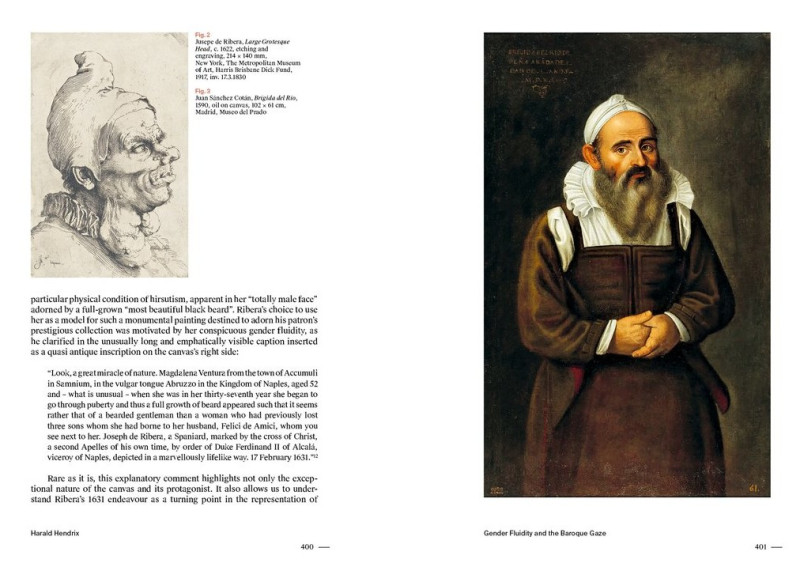
Gender Fluidity and the Baroque Gaze
Harald Hendrix
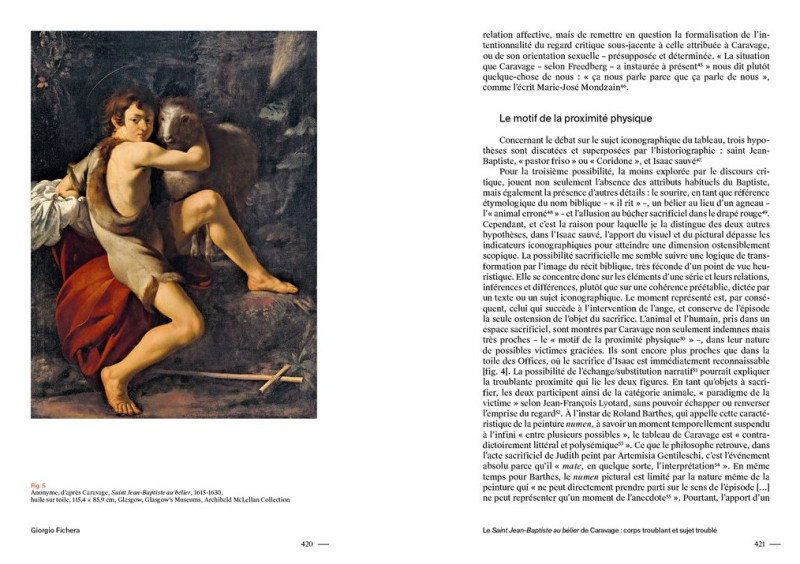
Le Saint Jean-Baptiste au bélier de Caravage: corps troublant et sujet troublé
Giorgio Fichera
Attention, contagieux! Le Bâilleur de Pieter Brueghel l'Ancien
Jürgen Müller
Le corps difforme du vilain: engagement inapproprié et dissonance cognitive chez Le Lorrain
Frédéric Cousinié
Annexes
Bibliographie
Index thématique
Index des noms
Crédits photographiques
Recently viewed items