No products
Product successfully added to your shopping cart
There are 0 items in your cart. There is 1 item in your cart.
Our webstore uses cookies to offer a better user experience and we consider that you are accepting their use if you keep browsing the website.

Bilingual art books and foreign editions
- New Art Books
- Exhibition catalogue
- Highlights
- Art Book Sale
- Museum's Shop & Gifts
- Bilingual art books and foreign editions
- Children's Books
- Art History
- Painting
- Architecture
- Sculpture
- Drawing & Engraving
- Photography
- Contemporary art
- Decorative Arts & Design
- Art Techniques
- Critics
- Entertainment art books
- Civilisations
- Partners Reviews
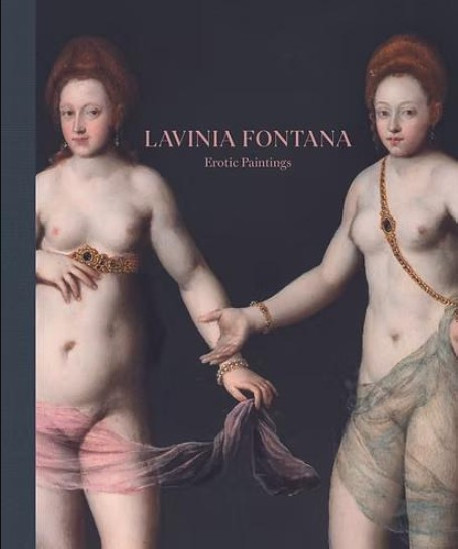
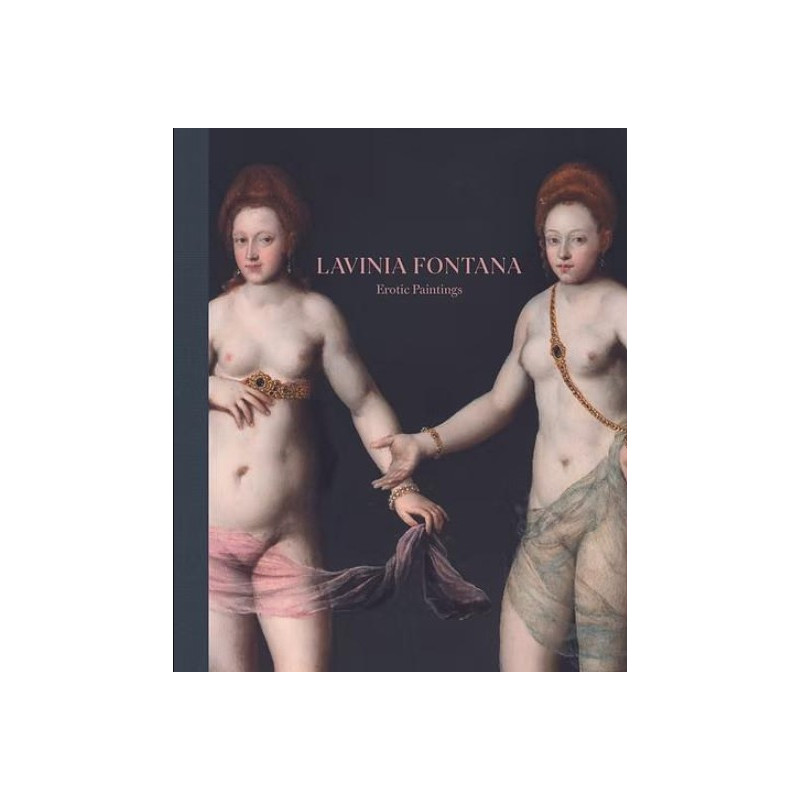
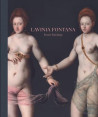
Lavinia Fontana - Erotic Paintings
Lavinia Fontana: Erotic Paintings is a groundbreaking reassessment of the Italian painter Lavinia Fontana (1552–1614), focusing for the first time on her erotic pictures, including a newly discovered work.
Shipped within 4 to 8 days
| Model | 9781915401298 |
| Artist | Lavinia Fontana |
| Author | Enrico Maria Dal Pozzolo |
| Publisher | Paul Holberton |
| Format | Hardcover |
| Number of pages | 192 |
| Language | English |
| Dimensions | 260 x 215 |
| Technique(s) | 130 illustrations |
| Published | 2026 |
Lavinia Fontana: Erotic Paintings is a groundbreaking reassessment of the Italian painter Lavinia Fontana (1552–1614), focusing for the first time on her erotic pictures, including a newly discovered work. This beautiful book offers an unprecedented study of Fontana’s engagement with sensuality, power and patronage – reshaping our understanding of one of the most important female artists of the Renaissance.
Drawing together new findings and long-overlooked evidence, Lavinia Fontana: Erotic Paintings makes the case that Fontana was a highly innovative artist, particularly in the field of erotic art. It highlights the crucial role played by her elite patrons and the sophisticated cultural circles in which she worked, and also offers a new history of the Venus Callipyge (‘Venus with the Beautiful Buttocks’) iconography, bringing together the relevant imagery and texts to trace its development and significance.
At the heart of the book is a previously unknown painting depicting three female nudes. Unpublished and unstudied until now, the work demonstrates extraordinary technical and conceptual refinement. Its unusual support, which subtly reflects the viewer, heightens the painting’s sense of intimacy and invites a direct encounter with the figures, one of whom is identified as Marie de’ Médicis, future Queen of France. The book traces the far-reaching implications of this identification and the iconographic innovations the painting introduces. A second focus is a Mars and Venus recently attributed to Fontana, where Mars prominently ‘caresses’ Venus’s backside. The author explores diverse influences behind this unprecedented iconography, which was probably devised for Lavinia’s main patron, Jacopo Boncompagni Ludovisi, the son of Pope Gregory XIII.
The volume features an introduction by the leading Renaissance and Baroque scholar Elizabeth Cropper, and research by Cristina Farnetti.
Recently viewed items